



Making complex benefits feel simple: redesigning Unum’s Claim & Leave Insight.
May 1, 2026Unum’s promise is unusually clear for an insurance company: make benefits easy to deliver, simple to use, and hassle-free to manage. Our brief was to bring that promise into the application that HR teams rely on most — Claim & Leave Insight — by modernizing a legacy experience that had quietly grown unwieldy as Unum’s product set scaled around it.
The brief
Claim & Leave Insight is the application HR managers, benefits administrators, and Unum service partners use to monitor disability claims and leave cases across an employer’s population. Years of incremental feature additions had produced a tool that worked — the data was right and the workflows were complete — but felt distinctly of a different era. Tables sprawled, navigation forked unexpectedly, branding was inconsistent, and new features were increasingly difficult to introduce without bumping into legacy patterns. Unum asked us to bring the application forward: easier to use, on-brand, and built so the next ten capabilities could ship without another redesign.
Listening before redrawing
We began with field research alongside HR leaders, benefits specialists, and Unum’s own service teams. Several patterns surfaced quickly. Administrators rarely came to the application to browse — they came with a specific question (“is this claim approved,” “who’s out next week,” “what does our absence rate look like this quarter”) and needed an answer in under a minute. They worked across multiple employer accounts and multiple Unum products in a single session. And they relied on the application to feel authoritative, because the decisions downstream of it were consequential: pay, leave eligibility, accommodations, return-to-work timing.
The legacy app didn’t fail people — it slowed them down. Modernization was an exercise in giving back time.
Ease of use, in three concrete moves
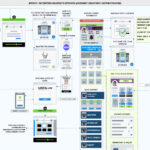
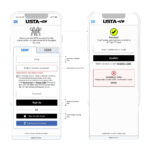
We translated the research into three operating principles that shaped every screen. First, the application should answer a question before it offers a tool: each landing surface leads with the most-asked question for that role and only then exposes the deeper management workflows. Second, data density was a feature, not a flaw — but it needed to be progressively disclosed. Summary cards and inline visualizations sit on top, with the complete record one click away rather than always on screen. Third, status had to be unmistakable. Claim and leave statuses were given a consistent visual treatment across the application, so that “pending,” “approved,” “in review,” and “closed” mean the same thing on every page.
A modern brand, applied with discipline
Unum’s brand had evolved meaningfully outside the application — warmer typography, a more confident color system, illustration that softened the inherent seriousness of insurance — but those shifts hadn’t reached Insight yet. We rebuilt the visual language from the type ramp up: new typographic hierarchy, a calibrated color system that uses Unum’s signature teal sparingly and intentionally, and a clear set of rules for status, emphasis, and interaction. The redesign feels modern not because it looks like a consumer app — the application is, after all, a system of record — but because every visual decision now serves a comprehension goal.
Design decision: we resisted the temptation to redesign every screen at once. The strategy was to ship the design system first, then refactor screens against it in priority order — which meant Unum’s team could begin getting modernization benefits months before the project was “finished.”
Insight, made actually insightful
The “Insight” in Claim & Leave Insight had historically been a name more than a feature. We invested heavily in the analytics surfaces: configurable dashboards that let an HR leader see absence trends, claim throughput, and policy utilization at the cuts that matter — by business unit, by leave type, by month. Charts were rebuilt with accessibility in mind from the first sketch (color is never the only carrier of meaning), and every visualization is paired with a one-line summary written in plain English so the chart can be understood at a glance, even before the eye parses it.
Built to scale
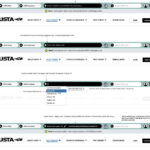
Scalability was, in the end, the hardest requirement to honor — and the most important. Unum’s product organization is constantly extending the application: new leave types, new reporting cuts, new self-service flows for claimants and administrators. We delivered a component library that maps cleanly to the engineering team’s React architecture, with documented patterns for tables, filters, status, empty states, and data visualization. The library is versioned, themed, and tokenized, so a future change — a new accent color, a new typeface, a new product line — can propagate through the application without a full redesign cycle. The application now grows the way the business does: by addition, not by rework.
Accessibility, treated as table stakes
Because Claim & Leave Insight is used to administer benefits including disability and medical leave, it has an obligation to be exceptionally accessible. We brought the application up to WCAG 2.1 AA across the redesigned surfaces, with keyboard navigation, screen-reader semantics, and color-contrast standards designed in from the first wireframes rather than retrofitted at QA. Accessibility, in this context, isn’t compliance — it’s aligned with the company’s mission.
Outcome
The redesigned Claim & Leave Insight reaches its primary tasks faster, looks unmistakably like Unum, and gives the product organization a foundation it can keep building on. Internal satisfaction scores moved up across both HR and Unum service users. Time-to-answer for the most-asked workflows dropped meaningfully. And, less visibly but more importantly, the team shipping new features no longer has to choose between staying inside the legacy patterns and doing the right thing — the design system makes the right thing the default. The application is now what Unum’s brand has always promised: complex benefits made to feel simple.